Breaking news: Former Pres. Jacob Zuma disbands MK Party

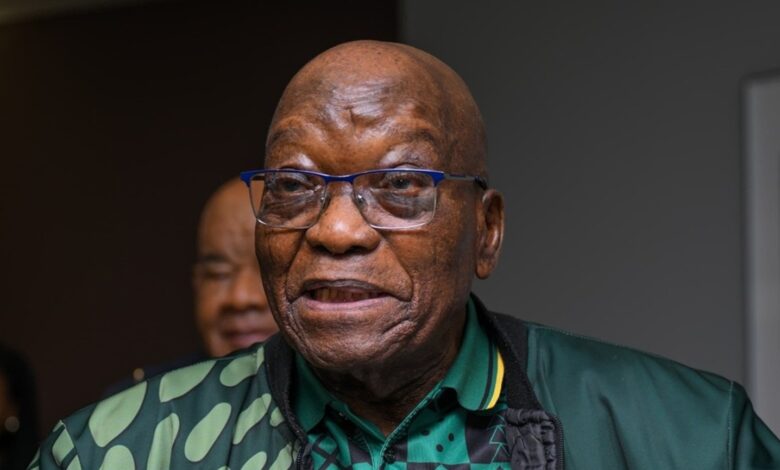
Former president Jacob Zuma has announced a major restructuring of the MK Party ahead of the 2026 local government elections.
The shake-up includes the disbanding of the party’s National High Command and the creation of a new MK Party Institute that will oversee the movement’s political and organisational direction.
The party held a press briefing on Saturday at Coastlands Skye Hotel in Ridgeside, uMhlanga, where details of the restructuring and the party’s new direction were outlined.
In a lengthy statement issued afterwards, Zuma said the restructuring followed an 18-month organisational and ideological assessment of the party and that the new Institute would become the movement’s central strategic and administrative authority, with all organisational structures reporting directly to it.
The Institute will be politically led by party deputy president Dr Mandlakayise Hlophe and includes senior party figures such as spokesperson Nhlamulo Ndhlela, General Manana, Oupa Mathebula, Dr Khanyisile Litchfield-Tshabalala and Lindelani Mbambo.
As part of the shake-up, Zuma announced that the MK Party Institute would immediately begin identifying and forming a new National Executive Committee (NEC), while what was previously known as the National High Command would be disbanded.
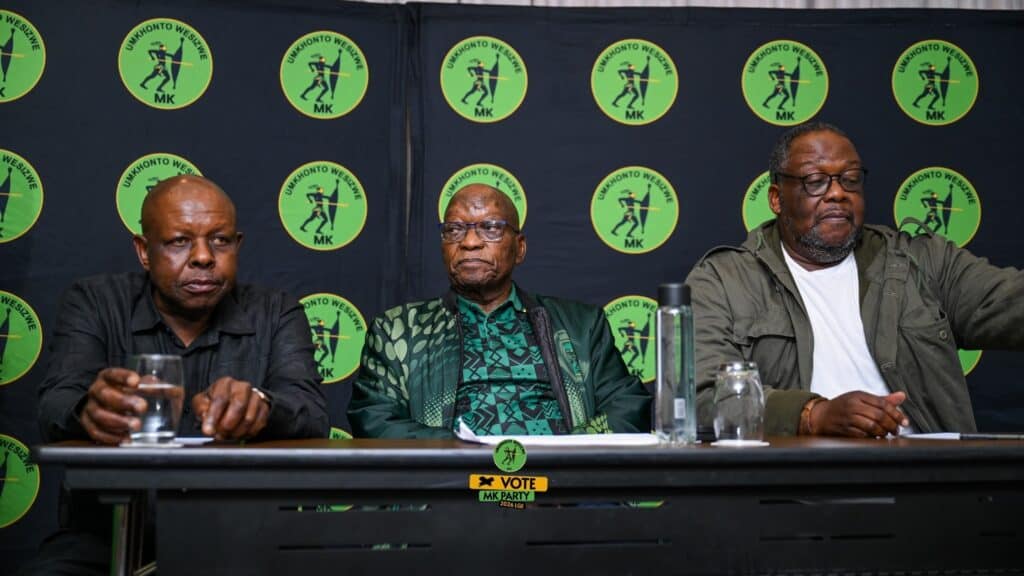
The party said the changes were aimed at transforming the MK Party from a conventional political party into what it described as a broader liberation movement.
“The liberation of our people cannot be reduced to slogans, conferences, parliamentary speeches, or election campaigns,” the statement read.
The party also indicated that it wanted South Africa to have a new constitutional conversation rooted in African traditions, values and identity.
According to the statement, the current Constitution remains heavily influenced by Roman-Dutch law and does not fully reflect the aspirations of the African majority.
The MK Party further stated that it would continue advocating for a review of the Constitution while pushing for what it called African restoration and total liberation.
The new structures will focus heavily on preparing for the 2026 local government elections and the 2029 national elections through grassroots mobilisation, activism and community-based campaigns.